Real-Time Urban Asset Visualization Powered by RFID Technology
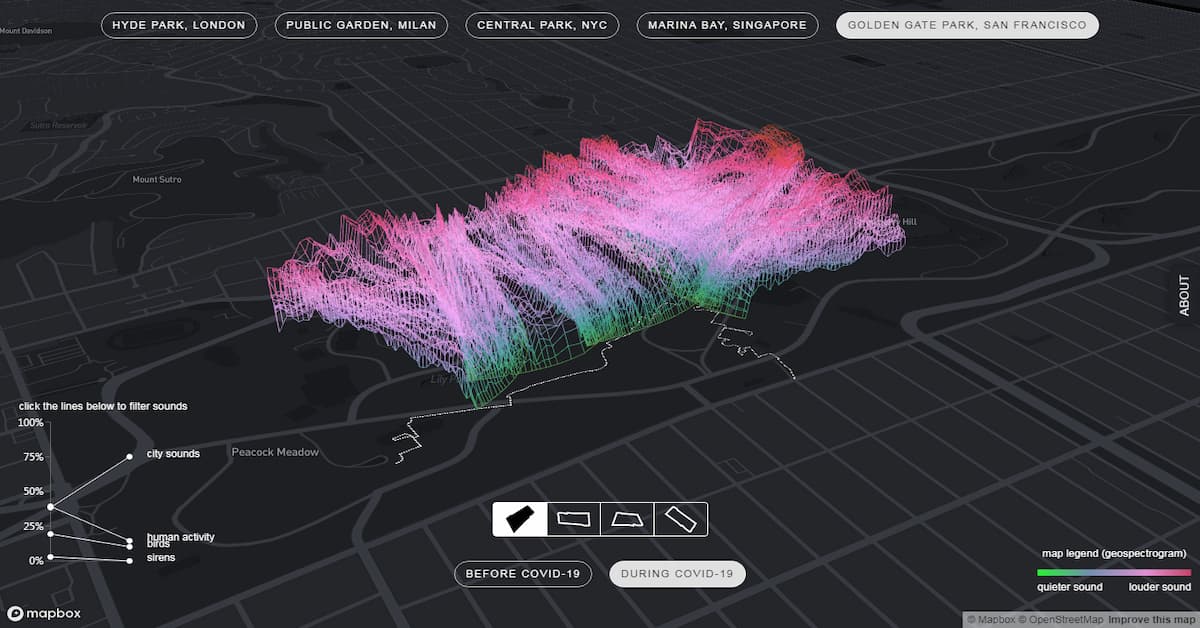
As digital cities and smart cities continue to evolve, the inability to clearly see, accurately manage, and effectively track urban assets and public facilities has become a major constraint on refined urban governance. From underground pipelines and road infrastructure to public transportation equipment and municipal assets, cities manage vast numbers of assets that are widely distributed and complex throughout their life cycles. Traditional management methods—largely dependent on manual records and fragmented systems—are no longer sufficient to support the efficient operation of modern cities.
Against this backdrop, Radio Frequency Identification (RFID) technology is increasingly becoming a critical component of digital city infrastructure, providing cities with the ability to make assets and public facilities visible, traceable, and digitally manageable in real time.
A city is essentially a complex system composed of countless assets and facilities, including streetlights, manhole covers, bridge components, firefighting equipment, traffic infrastructure, public vehicles, and sanitation equipment. These assets share three defining characteristics.
First, their sheer scale—medium to large cities often manage millions of public assets.
Second, their complex spatial distribution, with many assets located underground, along roadways, or in restricted environments.
Third, their long life cycles and continuously changing conditions, involving installation, inspection, maintenance, and eventual decommissioning.
Under traditional management models, asset information is often scattered across different departments and systems, with updates relying heavily on manual data entry. This results in limited accuracy and poor timeliness. When damage, loss, or accountability issues arise, extensive manpower is typically required for investigation and verification. This lack of visibility directly impacts operational efficiency and public safety.
Within the architecture of smart cities, RFID typically functions at the perception and data acquisition layer, serving as the technology that assigns a digital identity to physical assets. By attaching UHF RFID tags or UHF RFID stickers to municipal assets and public facilities, each physical object can be uniquely identified, automatically recognized, and integrated into city-level digital systems.
Compared with QR codes or manual numbering, UHF RFID solutions offer distinct advantages. They enable non-contact, batch identification without line-of-sight requirements, and maintain stable performance in harsh urban environments such as underground spaces, rain, dust, or high-traffic areas. This makes them particularly suitable for long-term deployment on infrastructure assets with minimal maintenance.
When RFID tags are combined with fixed readers, handheld terminals, or vehicle-mounted devices, and connected to urban IoT platforms, city administrators gain real-time visibility into asset locations, conditions, usage records, and movement histories—forming a comprehensive digital map of urban assets.
RFID does not function in isolation; its true value emerges through deep integration with GIS, BIM, and digital twin platforms.
In practical implementations, city management systems typically follow a structured pathway to achieve asset visualization:
First, RFID tags are deployed on critical assets using standardized identification and coding rules.
Second, asset data is automatically collected through roadside infrastructure equipped with directional RFID readers, handheld inspection devices, or vehicle-mounted readers. Directional readers are especially effective in urban environments where controlled reading zones—such as intersections, entrances, or maintenance points—are required to improve data accuracy.
Third, RFID data is linked with GIS maps and 3D city models, creating unified views that combine location, status, and asset attributes.
Finally, management personnel can visually monitor asset distribution, operational status, and historical records through centralized platforms.
This real-time visualization transforms urban assets from static records into dynamic digital entities, laying the foundation for refined urban governance.
In municipal infrastructure management, RFID has been widely applied to assets such as manhole covers, streetlights, and waste containers. By installing durable UHF RFID tags on these facilities and integrating them with routine inspection systems, cities can effectively prevent loss, misplacement, or unauthorized replacement, significantly improving road safety and maintenance efficiency.
In public transportation and municipal operations, RFID vehicle management has become a key application scenario. By equipping public service vehicles—such as sanitation trucks, maintenance vehicles, and emergency response units—with RFID identification, cities can automatically record vehicle movements, operational routes, and task execution when vehicles pass designated checkpoints or controlled zones. This enables accurate performance evaluation, optimized dispatching, and transparent resource utilization.
In the public safety domain, RFID is also used to manage firefighting equipment and emergency supplies. During emergencies, authorities can quickly locate available resources and assess their operational status, dramatically reducing response times and improving coordination across departments.
RFID-based asset visualization systems do more than upgrade technology; they fundamentally reshape urban governance models.
On one hand, they shift management from reactive responses to process-based supervision and predictive maintenance. By accumulating long-term usage and condition data, systems can identify high-risk assets in advance, reducing the likelihood of failures and accidents.
On the other hand, they promote cross-departmental data collaboration. A unified digital identity for assets allows different government departments to work from a shared data foundation, breaking down information silos.
More importantly, RFID provides continuous, real-world data support for digital twin cities, enabling virtual models to evolve in sync with physical environments rather than remaining static visualization tools.
As cities continue to expand and governance requirements grow more sophisticated, digital city development is shifting from fragmented systems toward unified infrastructure platforms. RFID, as a key technology bridging the physical and digital worlds, is becoming an indispensable foundation for managing urban assets and public facilities.
Looking ahead, as RFID integrates further with 5G, artificial intelligence, and edge computing, the value of its data will continue to increase—driving cities toward greater transparency, efficiency, and safety.
In this transformation, RFID is not merely an identification tool; it is a critical starting point for real-time perception and visual governance in the digital city era.
kategorie
nowy blog
prawa autorskie © 2026 Shenzhen Jietong Technology Co.,Ltd. Wszelkie prawa zastrzeżone.

obsługa sieci IPv6

 Polski


