
zostaw wiadomość
Jeśli jesteś zainteresowany naszymi produktami i chcesz poznać więcej szczegółów, zostaw wiadomość tutaj, odpowiemy tak szybko, jak to możliwe.




Najlepszy zakup, jaki zrobiłam tej zimy! Kolor i dzianina są przepiękne, a do tego bardzo wygodne! Przejechałam z Nowego Jorku do Miami, nie zdejmując ich ani razu. Super urocze!!
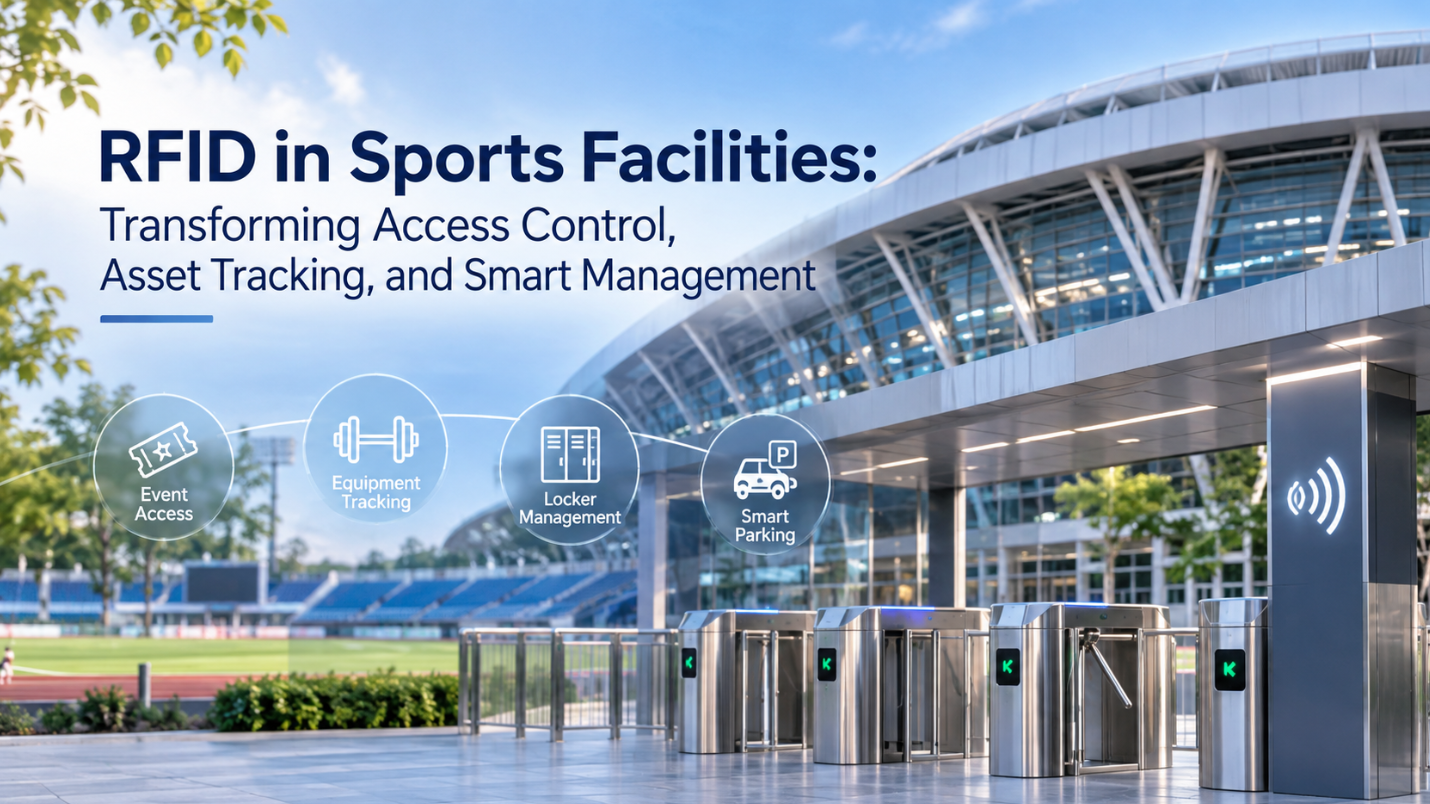
With the rapid development of digital technology, sports facilities are moving toward smarter and more efficient management. From large stadiums and professional sports centers to gyms, swimming pools, and community sports venues, facility operators are facing increasing demands for better access control, equipment management, personnel tracking, and operational efficiency. Traditional management methods, which often rely on manual registration, paper records, and barcode scanning, can no longer fully meet these requirements.
Radio Frequency Identification (RFID) technology offers a practical solution. By using radio waves to identify and track tagged objects automatically, RFID enables sports facilities to collect real-time information about people, equipment, and assets. It reduces manual work, improves management accuracy, and provides a foundation for intelligent sports facility operations.
Access control is one of the most common applications of RFID in sports facilities. Traditional entry systems may require staff to check membership cards, scan QR codes, or manually verify visitor information. During peak hours, these procedures can create queues and increase the workload of front-desk employees.
RFID technology makes the process faster and more convenient. Members can use RFID cards, wristbands, or other wearable devices to enter designated areas. When an RFID tag approaches an RFID reader installed at an entrance, the reader automatically captures its identification information and sends it to the management system for verification.
Once the information is confirmed, the access control system can unlock the entrance. This process reduces manual intervention and helps prevent unauthorized access.
For gyms and fitness centers, RFID can also support different membership levels. For example, standard members may access general fitness areas, while premium members can enter exclusive training rooms or swimming pools. Temporary visitors can receive RFID wristbands with limited access permissions and expiration times.
By integrating RFID with membership management software, operators can monitor visitor numbers, record entry and exit times, and analyze facility usage patterns.
Sports facilities often manage large quantities of equipment, including balls, rackets, protective gear, fitness machines, training tools, and maintenance equipment. In large stadiums or professional training centers, manually checking these assets can be time-consuming and inefficient.
RFID provides an automated approach to equipment identification and inventory management.
By attaching RFID tags to sports equipment, each item receives a unique identification number. Fixed RFID readers can be installed in storage rooms, equipment distribution areas, and designated access points. Handheld RFID readers can also be used to conduct regular inventory checks.
When equipment passes through an RFID reading area, the system automatically records its movement. Staff can quickly identify which items have been borrowed, returned, transferred, or are missing.
For example, a football training center may use RFID tags to manage hundreds of footballs, training cones, uniforms, and protective accessories. Instead of counting each item individually, employees can use an RFID handheld reader to scan multiple tagged items within seconds, depending on the tag configuration and reading environment.
This approach improves inventory accuracy, reduces equipment loss, and helps ensure that the necessary equipment is available before training sessions and competitions.
In professional sports facilities, managing athletes, coaches, referees, medical personnel, maintenance workers, and other staff members requires reliable identification and access management.
RFID wristbands, ID cards, and wearable tags can provide convenient identity verification.
Each authorized individual receives an RFID credential linked to their personal information and access permissions. RFID readers installed at different entrances can identify individuals automatically when they pass through designated checkpoints.
For example, in a professional stadium, athletes may be authorized to enter locker rooms and training areas, while maintenance personnel may only access technical rooms and equipment storage areas. RFID-based access control helps enforce these permissions.
RFID can also support attendance management. When athletes or employees enter a training center, the system can automatically record their arrival times. Coaches and administrators can use these records to manage attendance and evaluate facility usage.
In certain applications, RFID can be combined with positioning technologies to improve personnel location management. However, conventional RFID identification does not automatically provide continuous real-time positioning. More advanced systems may require additional readers, antennas, or RTLS technologies.
Large sporting events often attract thousands or even tens of thousands of spectators. Managing ticket verification, entrance flow, and access permissions is a major operational challenge.
RFID-enabled tickets, smart cards, and wristbands can help improve the spectator experience.
Each ticket contains an RFID chip with a unique identification code. When spectators approach an entrance equipped with an RFID reader, their credentials can be identified and verified automatically.
Compared with traditional manual ticket inspection, RFID access systems can accelerate entry and reduce the workload of event staff.
RFID can also support different ticket categories. For example, general admission tickets, VIP tickets, media passes, and backstage credentials can be assigned different access permissions.
In addition, RFID wristbands can be integrated with cashless payment systems in stadiums. Spectators can use their wristbands to pay for food, drinks, merchandise, and other services, depending on the payment infrastructure.
By connecting RFID systems with ticketing and event management platforms, stadium operators can gain better visibility into visitor traffic and improve crowd management.
Locker management is another important application of RFID in gyms, swimming pools, sports centers, and stadium facilities.
Traditional lockers often rely on physical keys or password-based locks. Physical keys can be lost, while shared passwords may create security risks.
RFID-enabled locker systems offer a more convenient alternative. Members can use their RFID membership cards or wristbands to unlock assigned lockers. The system verifies the credential and grants access only to authorized users.
For example, when a gym member checks in, the management system can automatically assign an available locker. The member can then use an RFID wristband to access it throughout the visit.
RFID technology can also help administrators monitor locker usage, identify unoccupied lockers, and simplify locker allocation.
For large sports facilities with hundreds of lockers, automated management reduces administrative work and improves the overall visitor experience.
Sports facilities contain many valuable assets that require regular inspection and maintenance, including treadmills, weight machines, lighting systems, scoreboards, electronic timing equipment, and other technical installations.
Unexpected equipment failures can interrupt training activities and affect sporting events.
RFID can help establish a more systematic asset maintenance process.
By attaching RFID tags to individual assets, facility operators can create digital equipment records containing model information, purchase dates, maintenance histories, inspection schedules, and service records.
When maintenance personnel scan an RFID tag using a handheld reader, they can quickly access the corresponding asset information through a connected management system.
For example, a technician inspecting a treadmill can scan its RFID tag to check its previous maintenance records, identify outstanding repair tasks, and update the inspection status.
This approach makes asset information easier to retrieve and reduces the risk of missing scheduled maintenance.
Combined with maintenance management software, RFID can help sports facilities improve equipment availability, extend asset lifecycles, and control operating costs.
Large stadiums and sports complexes often operate extensive parking areas. During major sporting events, vehicle congestion and inefficient parking management can affect the visitor experience.
RFID vehicle identification systems can help improve parking operations.
RFID tags can be installed on authorized vehicles, while UHF RFID readers are positioned at parking entrances and exits. When a registered vehicle approaches the reading area, the system identifies its RFID tag and verifies its access permissions.
The parking system can then automatically control the entrance barrier and record the vehicle's entry or exit time.
For sports facilities with VIP parking, employee parking, and public parking areas, RFID can support different vehicle access permissions.
The collected information can also help operators analyze parking utilization and improve traffic organization during large events.
The value of RFID extends beyond individual identification and inventory applications. When integrated with the Internet of Things (IoT), cloud platforms, and facility management software, RFID can become part of a comprehensive smart sports management system.
RFID readers collect identification data from tagged objects and transmit it to a central management platform through communication interfaces such as Ethernet, Wi-Fi, or other supported network connections.
The platform processes the collected information and presents it through dashboards, reports, and management applications.
For example, a sports center can combine RFID access control, equipment tracking, locker management, and maintenance records into one platform. Administrators can monitor facility operations, check equipment availability, and review membership activity from a centralized interface.
RFID can also work alongside technologies such as video surveillance, sensors, and artificial intelligence. While RFID provides reliable identification, other technologies can provide additional information about environmental conditions, equipment status, and operational activities.
This combination helps sports facilities move from isolated management processes toward more connected and data-driven operations.
Different sports facility applications require different RFID technologies. Selecting the appropriate frequency, reader, antenna, and tag is essential for achieving reliable identification performance.
Low Frequency (LF) RFID is suitable for certain short-range identification applications, particularly where simple and stable tag recognition is required.
High Frequency (HF) RFID, including NFC-compatible systems, is commonly used for membership cards, ticketing, and short-range credential verification. It is particularly useful when users need to intentionally present a card or wristband near a reader.
Ultra-High Frequency (UHF) RFID is suitable for applications requiring longer reading distances and bulk identification. It is widely used in sports equipment inventory, asset tracking, vehicle management, and access control systems.
When designing an RFID solution, facility operators should consider several factors:
Reading distance: Determine whether the application requires close-range identification or longer-distance reading.
Tag type: Select appropriate cards, wristbands, labels, or rugged tags according to the application environment.
Reading speed: Consider how many tagged items or people need to be identified within a specific period.
Environmental conditions: Account for metal equipment, moisture, temperature, and potential signal interference.
System integration: Ensure that RFID readers can communicate with existing management software and databases.
Scalability: Choose equipment that can support future expansion and additional management functions.
A well-designed RFID system should match the actual operational requirements rather than simply pursuing the longest reading distance or highest reader performance.
As sports facilities continue to adopt digital management technologies, RFID will play an increasingly important role in improving operational efficiency and service quality.
Future applications may include more advanced wearable identification systems, automated equipment distribution, intelligent inventory monitoring, and integrated stadium management platforms.
For professional sports organizations, RFID can also contribute to training equipment management and competition operations by improving the accuracy and accessibility of identification data.
However, successful implementation requires more than installing RFID readers and tags. Facilities need to consider system architecture, data management, hardware compatibility, and the actual workflows of staff and visitors.
With the right combination of RFID hardware and software, sports facilities can gradually build a more efficient, connected, and intelligent management environment.
RFID technology is transforming the way sports facilities manage people, equipment, vehicles, and daily operations. From smart access control and membership management to equipment tracking, event ticketing, locker management, and asset maintenance, RFID provides reliable identification and automated data collection capabilities.
By reducing manual procedures, improving inventory accuracy, and strengthening operational visibility, RFID helps sports facilities optimize resource utilization and deliver better services to athletes, employees, and spectators.
As smart sports infrastructure continues to develop, RFID will remain an important technology for building more efficient and intelligent sports facilities.

Szczegółowe informacje i plik PDF

Kontakt mailowy z pomocą techniczną.

Profesjonalne doradztwo techniczne.

Kontakt mailowy z pomocą techniczną.



POŁĄCZYĆ

Youtube

zostaw wiadomość
Skanuj do Wechat/WhatsApp :



 IPv6 OBSŁUGIWANA SIEĆ