
zostaw wiadomość
Jeśli jesteś zainteresowany naszymi produktami i chcesz poznać więcej szczegółów, zostaw wiadomość tutaj, odpowiemy tak szybko, jak to możliwe.




Najlepszy zakup, jaki zrobiłam tej zimy! Kolor i dzianina są przepiękne, a do tego bardzo wygodne! Przejechałam z Nowego Jorku do Miami, nie zdejmując ich ani razu. Super urocze!!
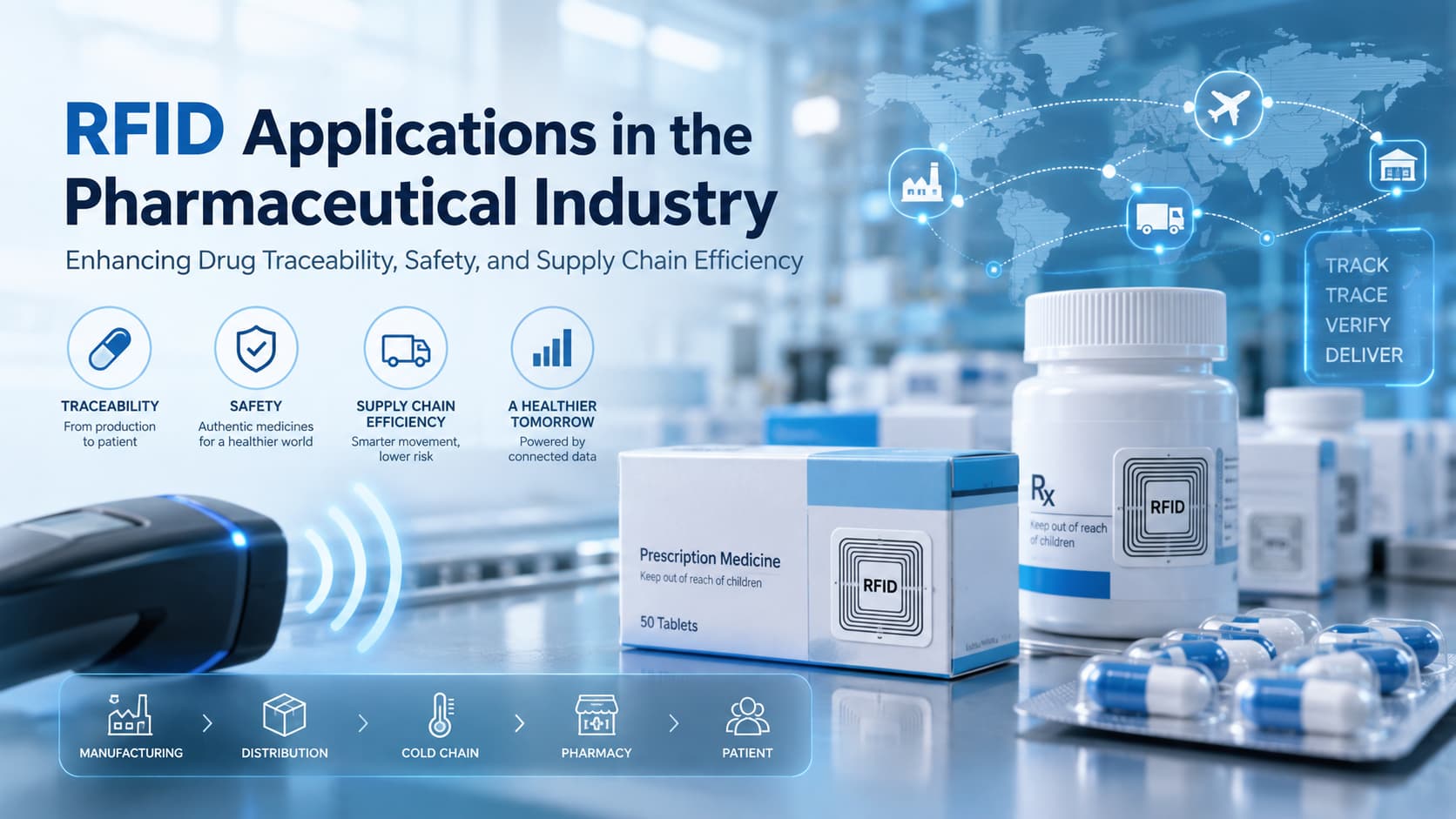
The pharmaceutical industry is one of the most highly regulated industries worldwide, requiring strict control over product quality, safety, and distribution processes. From raw material procurement and drug manufacturing to packaging, transportation, storage, and final delivery, every stage of the pharmaceutical supply chain must be accurately monitored and documented. However, traditional tracking methods such as barcode systems and manual record-keeping often face limitations, including inefficient data collection, human errors, limited visibility, and difficulties in tracking pharmaceutical products throughout the entire supply chain.
With the increasing demand for pharmaceutical safety, regulatory compliance, and supply chain transparency, Radio Frequency Identification (RFID) technology has become an important solution for modern pharmaceutical management. By using radio frequency signals to identify and track products automatically, RFID enables real-time monitoring of medicines, improves traceability, reduces counterfeit risks, optimizes inventory management, and enhances overall supply chain efficiency.
Today, RFID applications in the pharmaceutical industry are transforming how pharmaceutical companies manufacture, manage, distribute, and protect medicines.
RFID (Radio Frequency Identification) is an automatic identification technology that uses electromagnetic waves to exchange information between RFID tags and readers. Unlike traditional barcode systems, RFID does not require direct contact or visual scanning, allowing multiple products to be identified simultaneously and improving operational efficiency.
An RFID system typically consists of RFID tags, RFID readers, and data management software. RFID tags contain microchips and antennas that store important product information, including drug identification numbers, batch details, manufacturing dates, expiration dates, and storage requirements. Depending on application needs, RFID tags can be divided into passive RFID tags and active RFID tags. Passive RFID tags obtain energy from RFID readers and are commonly used for pharmaceutical packaging and inventory tracking, while active RFID tags contain built-in batteries and are suitable for applications requiring longer communication distances or continuous monitoring, such as cold chain transportation.
RFID readers collect information stored in tags and transmit the data to pharmaceutical management systems. These systems can integrate with enterprise platforms such as Enterprise Resource Planning (ERP), Manufacturing Execution Systems (MES), and Warehouse Management Systems (WMS), providing companies with complete visibility of pharmaceutical products throughout their lifecycle.
Pharmaceutical supply chains are highly complex and involve strict requirements for product authenticity, storage conditions, inventory accuracy, and regulatory compliance. Unlike ordinary consumer goods, pharmaceutical products directly affect human health, meaning that any mistake in production, transportation, or distribution can result in serious consequences.
Counterfeit drugs, improper storage conditions, expired medicines, and inaccurate inventory records are major challenges faced by pharmaceutical companies. RFID technology provides an effective solution by creating a digital identity for each pharmaceutical product and enabling real-time tracking throughout the supply chain.
Through RFID systems, pharmaceutical companies can improve product visibility, quickly locate products, reduce operational risks, accelerate recall processes, and ensure that medicines reach patients safely and efficiently.
One of the most important applications of RFID in the pharmaceutical industry is product traceability. Each pharmaceutical product or package can be equipped with an RFID tag containing unique identification information. This allows companies to track medicines from manufacturing facilities to warehouses, distributors, hospitals, pharmacies, and final users.
RFID technology enables companies to record and monitor critical information such as raw material sources, production batches, packaging processes, transportation routes, and storage locations. If a quality problem occurs, pharmaceutical manufacturers can quickly identify affected products and determine their current locations within the supply chain.
Compared with traditional manual tracking methods, RFID provides faster and more accurate traceability. This capability is especially valuable during pharmaceutical recalls because companies can identify specific affected batches instead of recalling large quantities of products unnecessarily. As pharmaceutical regulations continue to become stricter worldwide, RFID-based traceability systems are becoming increasingly important for compliance and quality management.
Counterfeit medicines remain a significant challenge for the global pharmaceutical industry. Fake or unauthorized pharmaceutical products can threaten patient safety and cause significant financial losses for manufacturers.
RFID technology provides an effective approach to pharmaceutical authentication by assigning each product a unique digital identity. Through RFID tags, companies can store information such as manufacturer details, serial numbers, production batches, and distribution records.
Before medicines are distributed or dispensed, authorized personnel can verify product authenticity using RFID readers. This helps prevent counterfeit products from entering legitimate supply chains.
When RFID is combined with advanced technologies such as blockchain, pharmaceutical companies can create secure and transparent tracking systems. Every transaction and movement of a product can be recorded, making it more difficult for unauthorized modifications or counterfeit activities to occur.
Efficient inventory management is essential in pharmaceutical operations because many medicines have limited shelf lives, strict storage requirements, and high production costs. Traditional inventory management methods often depend on manual counting and barcode scanning, which can result in inaccurate records, expired products, and inefficient stock control.
RFID technology allows pharmaceutical warehouses to automate inventory management processes. Products equipped with RFID tags can be automatically identified when entering or leaving storage areas. Warehouse operators can quickly access information about product quantities, locations, expiration dates, and batch numbers.
By providing real-time inventory visibility, RFID helps pharmaceutical companies optimize stock levels, reduce expired products, and improve warehouse efficiency. For medicines with strict expiration requirements, RFID systems can support the First Expired, First Out (FEFO) inventory management method, ensuring that products with shorter remaining shelf lives are distributed first.
Many pharmaceutical products, including vaccines, biological drugs, and certain injectable medicines, require precise temperature control during transportation and storage. Even short-term exposure to unsuitable temperatures can reduce drug effectiveness.
RFID technology combined with temperature sensors enables continuous monitoring of pharmaceutical cold chains. RFID-enabled sensors can record temperature changes, humidity levels, and transportation conditions throughout the entire logistics process.
If abnormal environmental conditions occur, the system can immediately generate alerts, allowing operators to take corrective actions before product quality is affected.
By improving cold chain visibility, RFID helps pharmaceutical companies reduce product losses, maintain drug quality, and meet strict regulatory requirements for temperature-sensitive medicines.
RFID technology is also increasingly used in pharmaceutical manufacturing facilities to improve production control and operational efficiency.
During manufacturing processes, RFID tags can track raw material containers, production batches, processing steps, and quality inspection records. This allows manufacturers to verify whether the correct materials are used and whether production procedures follow established requirements.
For example, RFID systems can automatically identify raw materials before production begins, reducing the risk of material errors or batch mixing problems. By integrating RFID with Manufacturing Execution Systems (MES), pharmaceutical companies can achieve greater automation, improve production transparency, and strengthen quality control.
Beyond pharmaceutical manufacturing and logistics, RFID technology is also widely used in hospitals and pharmacies to improve medication management.
Hospitals handle thousands of pharmaceutical products every day, making accurate inventory control and medication verification extremely important. RFID systems can help track medicine storage locations, monitor expiration dates, and verify medications before they are provided to patients.
By reducing manual processes and improving identification accuracy, RFID helps healthcare organizations minimize medication errors and improve patient safety.
Hospital pharmacies can also use RFID technology to automatically monitor inventory levels, identify products requiring replenishment, and manage high-value medicines more effectively.
The adoption of RFID technology provides pharmaceutical companies with several important benefits. First, RFID improves pharmaceutical traceability by providing complete visibility across the supply chain. Companies can understand where products are produced, stored, transported, and delivered.
Second, RFID enhances pharmaceutical safety by reducing counterfeit risks, improving recall efficiency, and ensuring proper storage conditions. Third, RFID increases operational efficiency by reducing manual inspections and automating inventory management processes.
In addition, RFID helps pharmaceutical companies meet increasingly strict regulatory requirements related to serialization, product tracking, and supply chain transparency.
Although RFID offers significant advantages, pharmaceutical companies must consider several challenges during implementation.
The first challenge is investment cost. RFID adoption requires investment in tags, readers, software systems, and integration with existing pharmaceutical management platforms. For some companies, especially small and medium-sized enterprises, initial implementation costs may be considerable.
Another challenge is technical integration. RFID systems must work effectively with existing ERP, MES, and warehouse management systems. Proper system planning and professional implementation are required to ensure reliable operation.
Data security is also an important consideration. Since RFID systems generate large amounts of pharmaceutical supply chain data, companies must establish appropriate security measures to protect sensitive information.
The future development of RFID technology will be closely connected with artificial intelligence (AI), blockchain, and the Internet of Things (IoT).
Artificial intelligence can analyze RFID-generated supply chain data to predict inventory demand, identify potential risks, and improve pharmaceutical logistics planning. Blockchain technology can further enhance pharmaceutical traceability by creating secure and tamper-resistant records.
In the future, RFID technology combined with robotics, automated warehouses, and smart manufacturing systems will support the development of fully digital pharmaceutical supply chains.
RFID applications in the pharmaceutical industry are reshaping the way medicines are produced, tracked, stored, and distributed. Through improved traceability, anti-counterfeiting protection, inventory optimization, and cold chain monitoring, RFID technology helps pharmaceutical companies improve safety, efficiency, and regulatory compliance.
As global pharmaceutical supply chains become more complex and healthcare standards continue to increase, RFID will play an increasingly important role in creating smarter, safer, and more transparent pharmaceutical management systems. For pharmaceutical manufacturers, distributors, hospitals, and pharmacies, RFID is becoming a key technology for building the future of intelligent healthcare supply chains.

Szczegółowe informacje i plik PDF

Kontakt mailowy z pomocą techniczną.

Profesjonalne doradztwo techniczne.

Kontakt mailowy z pomocą techniczną.



POŁĄCZYĆ

Youtube

zostaw wiadomość
Skanuj do Wechat/WhatsApp :



 IPv6 OBSŁUGIWANA SIEĆ